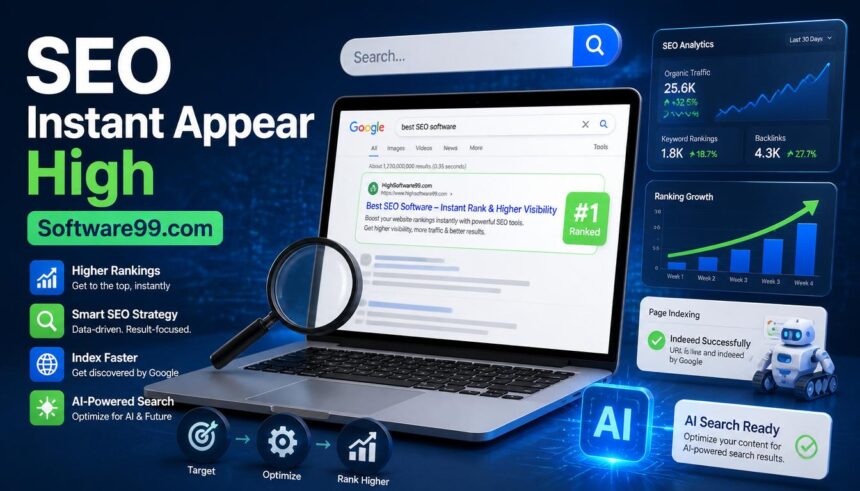
If you’ve recently searched for SEO Instant Appear HighSoftware99.com, you’re probably looking for ways to make your website appear on Google faster and improve its search visibility. Many website owners believe there is a secret method that can instantly place a website at the top of Google. In reality, search engine optimization (SEO) is a long-term process that combines quality content, technical optimization, and user experience.
This beginner’s guide explains what SEO Instant Appear HighSoftware99.com refers to, how Google indexes websites, and which SEO strategies actually help improve visibility over time. Whether you own a personal blog, business website, or online store, understanding these SEO fundamentals can help you build sustainable organic traffic.
What Is SEO Instant Appear HighSoftware99.com?
The phrase SEO Instant Appear HighSoftware99.com is commonly associated with discussions about improving website visibility in search engines. While the name suggests instant results, no legitimate SEO method can guarantee immediate first-page rankings on Google.
Instead, successful SEO focuses on helping search engines discover, crawl, and understand your website more efficiently. Once your pages are indexed, they become eligible to appear in search results when users search for relevant topics.
SEO is built around three main goals:
- Helping search engines find your website
- Providing useful content for users
- Improving website performance and trustworthiness
When these elements work together, your website has a much better chance of ranking for relevant searches.
Why SEO Is Important for Beginners
Millions of websites compete for attention every day. Without SEO, even the best content may never reach its intended audience.
SEO helps beginners by:
- Increasing organic website traffic
- Building brand credibility
- Attracting targeted visitors
- Reducing dependence on paid advertising
- Supporting long-term online growth
Unlike paid ads, organic traffic can continue bringing visitors long after content is published.
How Google Finds and Indexes Websites
Google follows a simple process before showing any webpage in search results.
1. Crawling
Google’s bots discover pages by following links from other websites and sitemaps.
2. Indexing
After a page is crawled, Google analyzes its content and stores it in its search index if it meets quality standards.
3. Ranking
When someone searches on Google, the search engine compares indexed pages and displays the most relevant, helpful, and trustworthy results.
Understanding these three stages helps explain why websites rarely appear in search results immediately after publication.
Basic SEO Principles Every Beginner Should Know
Create Helpful Content
Write content that answers real questions instead of focusing only on keywords. High-quality, original information is more valuable than repetitive or copied content.
Use Relevant Keywords Naturally
Research keywords that match your audience’s search intent and include them naturally in headings, paragraphs, and image alt text without overusing them.
Optimize Page Titles and Meta Descriptions
A clear title and compelling meta description encourage users to click your page from search results.
Improve Website Speed
Fast-loading websites provide a better user experience and are more likely to retain visitors.
Make Your Website Mobile-Friendly
Most Google searches happen on mobile devices. Responsive websites perform better and improve user satisfaction.
Common SEO Mistakes to Avoid
Many beginners slow their progress by making avoidable mistakes, such as:
- Keyword stuffing
- Publishing thin or duplicate content
- Ignoring technical SEO issues
- Using misleading titles
- Neglecting internal linking
- Forgetting to optimize images
- Not updating old content
Avoiding these mistakes creates a stronger foundation for long-term SEO success.
On-Page SEO: Optimizing Individual Web Pages
On-page SEO refers to the techniques used directly on a webpage to improve its visibility in search engines. It helps Google understand the purpose of your content while making it easier for visitors to read and navigate. A well-optimized page combines valuable information, proper formatting, and relevant keywords without sacrificing readability.
Write High-Quality Content
Content remains the foundation of every successful SEO strategy. Google prioritizes pages that provide accurate, original, and helpful information. Before writing, identify the questions your audience wants answered and structure your content around those topics. Focus on solving problems instead of simply repeating keywords.
High-quality content should:
- Answer users’ search intent.
- Include original insights and examples.
- Be easy to read with short paragraphs.
- Stay updated with current information.
- Offer practical value to readers.
When visitors spend more time reading your content, it sends positive engagement signals that can support long-term SEO performance.
Use Keywords Naturally
Keywords help search engines understand what your page is about, but they should always appear naturally. Instead of forcing your primary keyword into every paragraph, place it where it fits logically.
Good places to include keywords include:
- Page title
- Main heading (H1)
- Introduction
- One or two subheadings
- Meta description
- Image alt text
- URL slug
- Conclusion
Using related terms and semantic keywords also helps search engines understand the broader topic without over-optimizing the page.
Create Effective Headings
Well-organized headings improve both readability and SEO. Visitors often scan content before reading it in detail, so clear headings help them find the information they need quickly.
A typical structure includes:
- H1: Main title
- H2: Main sections
- H3: Supporting topics
- H4: Additional details if necessary
Avoid skipping heading levels or using headings only for design purposes.
Optimize Images
Images make articles more engaging, but they should also be optimized for search engines.
Best practices include:
- Compress images to reduce file size.
- Use descriptive file names.
- Add meaningful alt text.
- Choose modern image formats when possible.
- Ensure images load quickly on mobile devices.
Optimized images improve page speed and may also appear in Google Images search results.
Internal Linking
Internal links connect one page of your website to another. They help users discover additional content while allowing search engines to crawl your site more efficiently.
For example, if you publish articles about keyword research, technical SEO, and content marketing, linking them together creates a stronger website structure.
Benefits include:
- Better website navigation.
- Improved crawlability.
- Increased page authority distribution.
- Longer visitor sessions.
Technical SEO Basics
Technical SEO focuses on making your website easy for search engines to crawl, index, and understand. Even excellent content may struggle to rank if technical issues prevent search engines from accessing it.
Website Speed
Page speed is an important ranking factor because users expect websites to load quickly.
You can improve speed by:
- Compressing images.
- Enabling browser caching.
- Using fast hosting.
- Reducing unnecessary scripts.
- Minimizing CSS and JavaScript files.
A faster website generally provides a better user experience and lower bounce rates.
Mobile Optimization
Google primarily evaluates websites using their mobile version. If your website performs poorly on smartphones, your rankings may be affected.
A mobile-friendly website should:
- Adapt to different screen sizes.
- Display readable text.
- Use clickable buttons.
- Load quickly on mobile networks.
- Avoid intrusive pop-ups.
Secure Website (HTTPS)
Security plays an important role in user trust. Websites using HTTPS encrypt data between visitors and the server.
Benefits include:
- Better user confidence.
- Improved security.
- Potential SEO advantages.
- Protection of sensitive information.
Always install an SSL certificate before launching a website.
XML Sitemap
An XML sitemap lists the important pages on your website and helps search engines discover new content more efficiently.
Although Google can find pages through internal links, submitting a sitemap through Google Search Console often speeds up the discovery process.
Robots.txt
The robots.txt file tells search engine crawlers which sections of your website they can or cannot access.
Be careful when editing this file because accidentally blocking important pages can prevent them from appearing in Google Search.
Google Search Console
Google Search Console is one of the most valuable free SEO tools available.
It allows you to:
- Submit new pages for indexing.
- Monitor search performance.
- Identify crawl errors.
- View keyword impressions.
- Check mobile usability.
- Track indexing status.
Regularly reviewing Search Console helps identify problems before they affect your rankings.
The Importance of User Experience (UX)
SEO is no longer just about keywords. Search engines increasingly evaluate how users interact with websites.
A positive user experience includes:
- Fast loading pages.
- Easy navigation.
- Readable fonts.
- Logical page structure.
- Helpful content.
- Minimal distractions.
When users quickly find the information they need, they are more likely to stay on your website and return in the future.
Off-Page SEO: Building Your Website’s Authority
While on-page and technical SEO improve your website itself, off-page SEO focuses on building credibility across the web. Search engines often view mentions and links from trustworthy websites as signals that your content is valuable. However, quality matters far more than quantity.
Link Building
Backlinks are links from other websites pointing to your content. High-quality backlinks can improve your site’s authority and help search engines discover your pages.
Effective ways to earn backlinks include:
- Publishing original, helpful content.
- Writing guest posts for reputable websites.
- Creating research, guides, and case studies.
- Sharing valuable resources on social media.
- Building relationships within your industry.
Avoid purchasing backlinks or participating in link schemes, as these practices violate search engine guidelines and may lead to penalties.
Build Trust with E-E-A-T
Google encourages content that demonstrates Experience, Expertise, Authoritativeness, and Trustworthiness (E-E-A-T). While it is not a direct ranking factor, these principles help define what high-quality content looks like.
To improve E-E-A-T:
- Write content based on real knowledge or experience.
- Cite trustworthy sources when appropriate.
- Keep your information accurate and up to date.
- Include an author bio and contact information.
- Maintain transparency about your website and its purpose.
Readers are more likely to trust websites that clearly show expertise and provide reliable information.
AI Search Visibility
Search is evolving with AI-powered experiences that summarize information and answer user questions directly. To improve your visibility in AI-driven search experiences:
- Publish clear, well-structured content.
- Answer common questions directly.
- Use descriptive headings.
- Add tables, lists, and FAQs where appropriate.
- Keep your content fresh and factually accurate.
Content that is easy to understand and well organized is more likely to be surfaced in modern search experiences.
Common SEO Myths
Many beginners believe myths that can slow their progress. Here are a few common misconceptions:
Myth: SEO delivers instant results.
Reality: SEO is a long-term strategy, and meaningful improvements often take weeks or months.
Myth: More keywords always mean better rankings.
Reality: Overusing keywords can make content less helpful and may hurt performance.
Myth: Backlinks from any website are beneficial.
Reality: High-quality, relevant backlinks are much more valuable than large numbers of low-quality links.
Myth: Publishing content once is enough.
Reality: Updating existing content regularly helps keep it relevant and useful.
Beginner SEO Checklist
Use this checklist before publishing any new page:
- Conduct keyword research.
- Write original, reader-focused content.
- Create a compelling title and meta description.
- Use proper heading structure (H1, H2, H3).
- Optimize images with descriptive alt text.
- Add internal links to related pages.
- Ensure the page is mobile-friendly.
- Improve loading speed.
- Submit the page through Google Search Console.
- Monitor performance and update content when needed.
Following these practices consistently builds a strong SEO foundation.
Conclusion
Understanding SEO Instant Appear HighSoftware99.com begins with recognizing that successful SEO is built on long-term strategies rather than promises of instant rankings. Search engines reward websites that provide valuable, accurate, and user-focused content while maintaining strong technical performance and a positive user experience.
For beginners, the best approach is to focus on creating original content, optimizing each page with relevant keywords, improving website speed, ensuring mobile responsiveness, and regularly monitoring performance through tools like Google Search Console. Building trust with readers and following SEO best practices consistently will produce far better results than looking for shortcuts.
As search technology continues to evolve, staying informed about new SEO trends and continuously improving your website will help you remain competitive. By applying the strategies outlined in this guide, you can strengthen your online presence, increase organic visibility, and build a website that serves both users and search engines effectively.
FAQs
What is SEO Instant Appear HighSoftware99.com?
It generally refers to discussions about improving website visibility in search engines. While the name suggests instant results, successful SEO relies on consistent optimization, quality content, and proper indexing rather than immediate rankings.
Can a website appear on Google instantly?
Google may discover and index some pages quickly, but there is no guaranteed way to achieve instant rankings. Crawling, indexing, and ranking depend on many factors, including content quality and website authority.
Is SEO suitable for beginners?
Yes. Anyone can learn SEO by understanding search intent, creating valuable content, optimizing web pages, and following best practices.
How long does SEO take to show results?
Results vary depending on your website, competition, and industry. Many websites begin seeing improvements within a few months when they consistently publish quality content and maintain good technical SEO.
What is the most important SEO factor?
There is no single ranking factor. High-quality content, strong technical performance, helpful user experience, and trustworthy information all work together to improve search visibility.